
Building something is the fun part. Selling it is where most new businesses get stuck.
I see it all the time. Someone launches a great product, a nice website, a course or a service. Then they wait. And nobody comes.
Here's the truth. Your first 100 customers won't find you. You have to go and get them, one stage at a time.
In our guide on how to start an online business with AI, I covered building the business. This post is the next step. A simple plan to win your first 100 customers, with the AI tools that make it faster.
Why 100 Customers Is the Number That Matters
One hundred customers changes everything.
It proves people really want what you sell. It gives you reviews and stories you can share. It shows you which marketing works, so you stop guessing. And very often, it's the point where word of mouth starts doing some of the work for you.
After 100, growth gets easier. Before 100, every single sale takes effort. That's normal. Plan for it.
Before You Start, Get These Three Things Right
- One clear offer. One product or service, one price, one promise. Confused buyers don't buy.
- A simple website. A page that explains the offer and has one button. Webira builds a full business website with AI from a few details, so this takes an afternoon, not a month.
- An easy way to pay or book. Every extra step loses people.
That's it. You don't need a perfect brand, a logo designer or a fancy funnel to win your first customers.
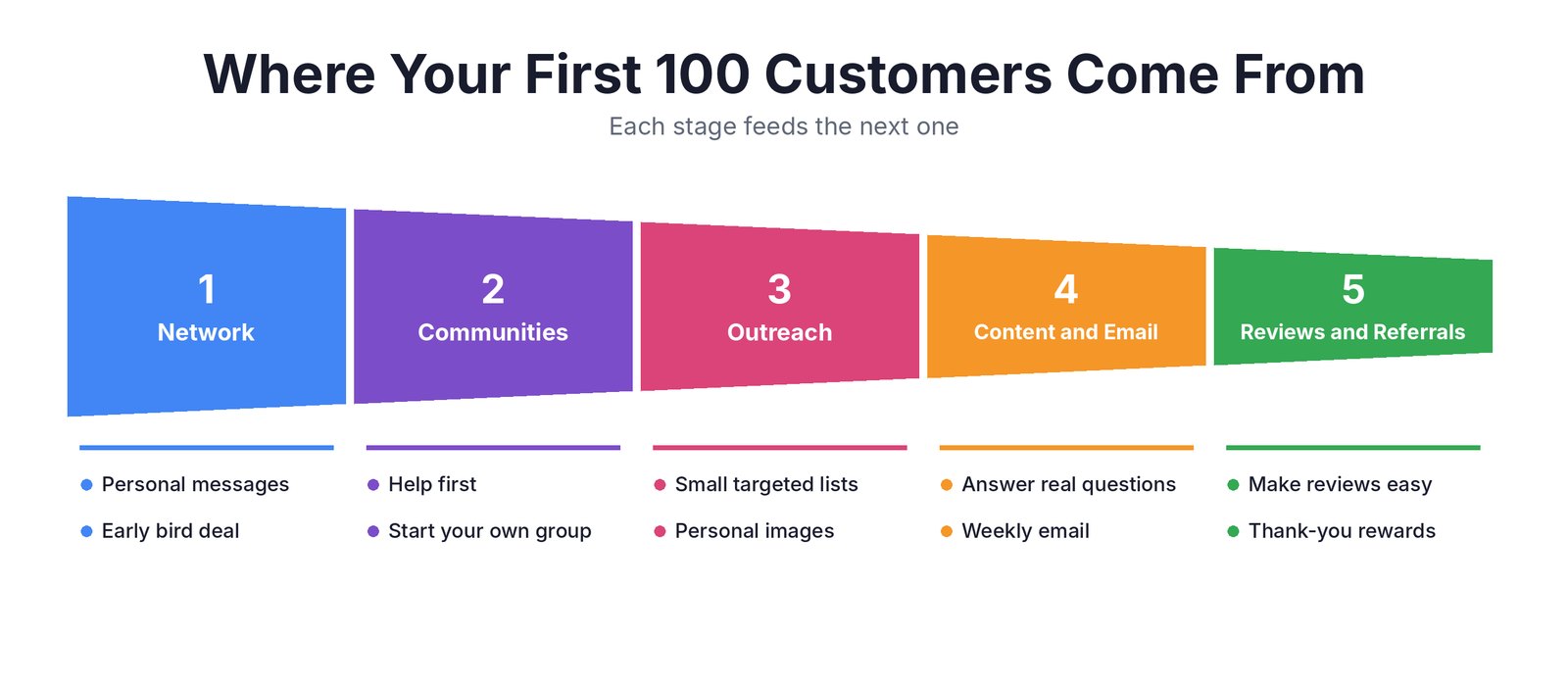
The Five Stages to 100 Customers
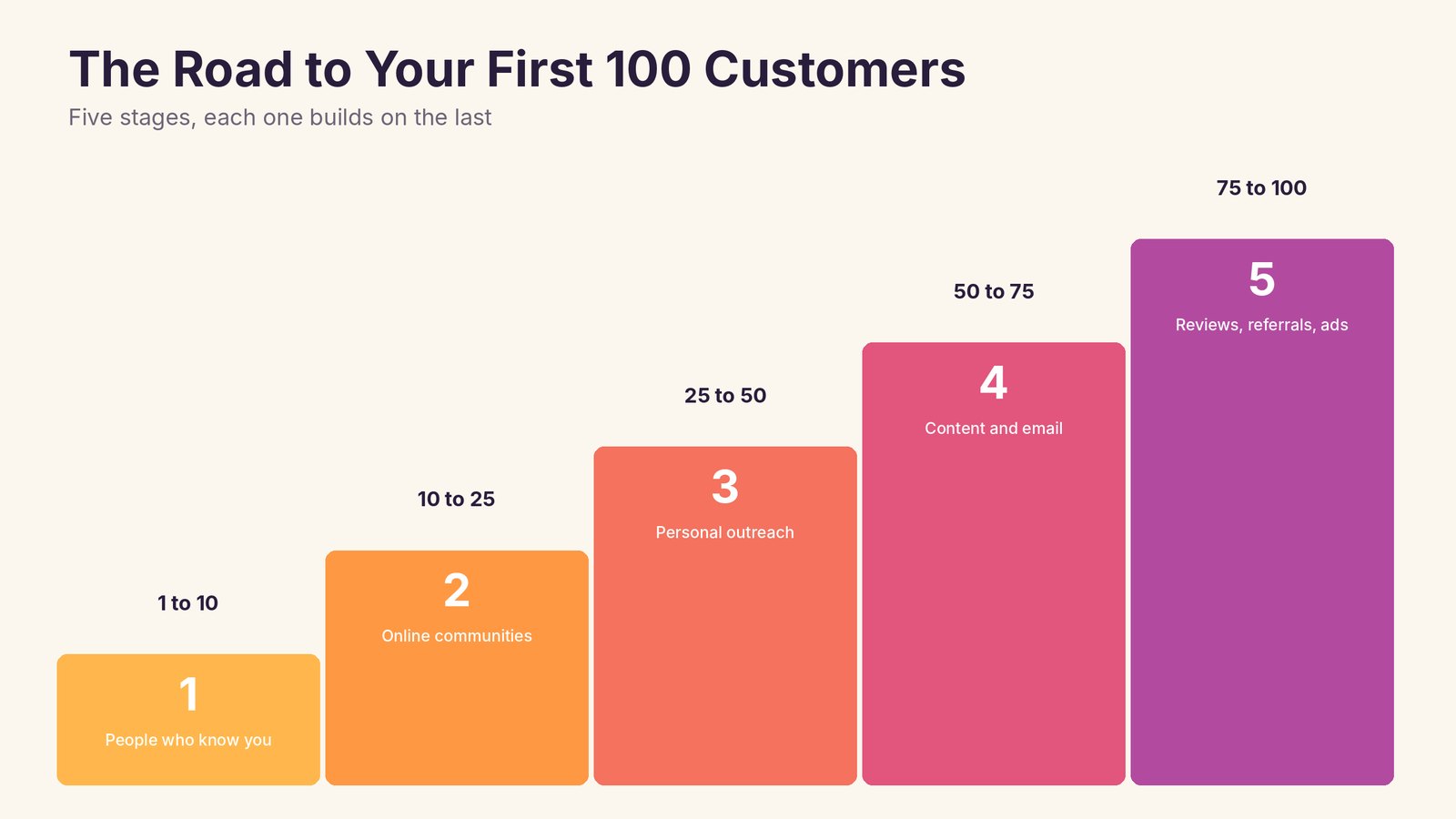
Each stage builds on the one before. Don't skip ahead to ads because they feel easier. The early stages teach you what to say, and that makes everything later work better.
Stage 1. Customers 1 to 10, People Who Know You
Your first customers almost always come from people who already trust you.
Friends, family, old colleagues, former clients, people in your local groups. Make a list of everyone who might buy or know someone who would. Most people are surprised to find 50 or more names.
Then message them one by one. Not a group blast. A real, personal note.
AI helps here, but use it carefully. Ask it to draft a short, friendly message, then rewrite it in your own words and add something personal to each one. "I remember you mentioned struggling with your shop's website. I just launched something that fixes that." That beats any template.
Offer an early bird deal for the first ten buyers, and ask each one for honest feedback. Those first conversations are gold.
Stage 2. Customers 10 to 25, Show Up in Communities
Next, go where your customers already hang out. Facebook groups, LinkedIn, X, Reddit, forums and local business groups.
The rule is simple. Help first, sell later. Answer questions. Share what you know. When people see you're useful, they check out what you do.
This takes time, so use AI to keep up. Engagi writes thoughtful comments and replies on Facebook, X and LinkedIn, so you can show up every day without spending hours. Always read and tweak before posting. Your voice is what people remember.
And think about starting your own community. A small group of the right people can become your best source of customers. Cohortia uses AI to help you build and run an engaged community in any niche.
Stage 3. Customers 25 to 50, Personal Outreach
Now you've learned how customers talk about their problems. Use those words to reach people who don't know you yet.
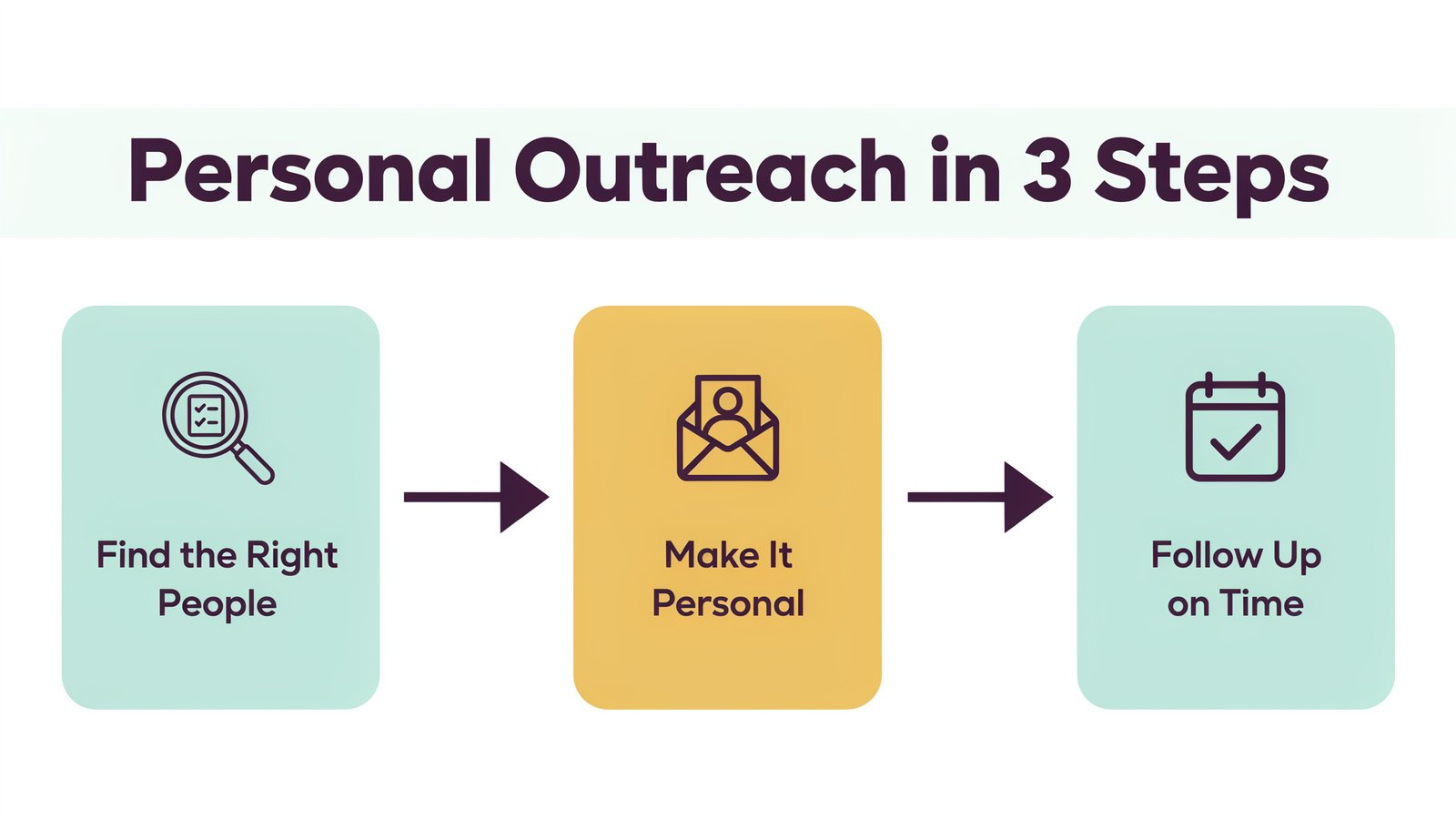
- Find the right people. Diggy Miner is an AI scraper that pulls leads from any website, like directories, listings and marketplaces, so you build a targeted list fast.
- Make it personal. Selli creates personalized images with the prospect's name or website inside, for emails, social messages and landing pages. Personal messages get noticed.
- Send and follow up. Outrich handles AI-powered email outreach, so your follow-ups go out on time without you tracking them by hand.
Keep the message short. Who you are, the one problem you solve, and a simple question. "Would this help you?" works better than a long pitch.
And keep it respectful. Small, targeted lists and real personalization beat mass emails every time, for results and for your reputation.
Stage 4. Customers 50 to 75, Content and Email
By now you know your customers' questions. Turn the answers into content.
Blog posts, short videos and social posts that answer real questions keep bringing people in long after you hit publish. AI makes this much faster. We wrote a full guide on automating small business marketing with AI that covers the content side in detail.
Want to reach other people's audiences too? Postifluence helps you find bloggers for guest posts and backlinks, which brings both traffic and trust.
Most important of all, start an email list. Not everyone buys on the first visit. Email brings them back.
Sendster is a self-hosted newsletter platform. Through Amazon SES you can send about 10,000 emails for around a dollar, so your list never gets expensive as it grows.
Send something useful every week. A tip, a short story, a customer win. Mention your offer often, but not in every line.
Stage 5. Customers 75 to 100, Reviews, Referrals and Small Ads
You now have dozens of customers. Put them to work, nicely.
- Ask for reviews. Happy customers will leave one if you make it easy. For local businesses, Qroq makes branded QR codes that open your review page right from a receipt or counter card.
- Show social proof. Converti adds sales notifications, reviews and other trust widgets to your pages, so new visitors see that real people buy from you.
- Ask for referrals. Offer a small thank-you, like a discount or a free month, for every friend they send.
- Test small ads. Now that you know what converts, a small ad budget can speed things up. Adplify helps you find hidden Facebook audiences and see what competitors are running.
Notice that ads come last. Ads only make a working offer grow faster. They rarely fix an offer that doesn't sell.
Don't Lose the Customers Who Show Up
Getting attention is hard. Losing it because nobody answered is painful.
Add an AI chat to your site with PeopleBots. It learns your business and answers questions any time of day, even while you sleep.
If people call you, Callsi gives you a human-sounding AI phone agent that answers, books appointments and follows up. No more lost sales from missed calls.
Small things like these can turn a few extra visitors into customers every week.
What to Say When You Reach Out
Most outreach fails because it's about the sender. Make it about the person reading.
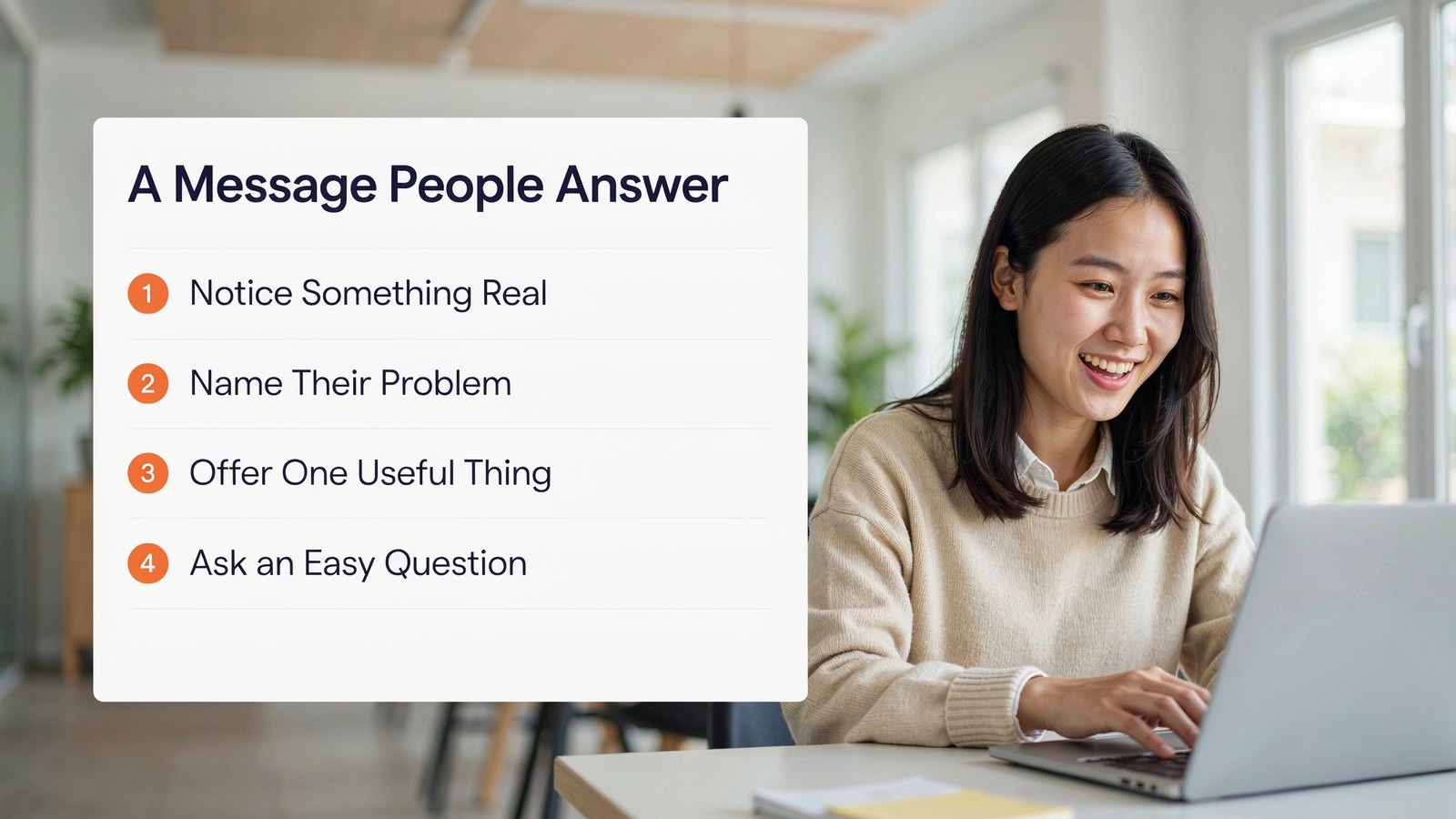
Here's a simple shape that works for personal messages, community replies and cold emails.
- Notice something real. Their website, a post they wrote, a problem they mentioned.
- Name the problem in their words. "Sounds like getting reviews is a struggle right now."
- Offer one small, useful thing. A tip, a quick fix or a free trial.
- Ask an easy question. "Want me to send it over?" is easier to answer than "Can we book a call?"
That's four short lines. No long story about your company. No list of features.
AI is great at turning this shape into ten versions you can test. Just make sure every message still sounds like a person wrote it. Because one did.
Turn Your First Customers Into Fans
Winning a customer is only half the job. Keeping them happy brings the next ones.
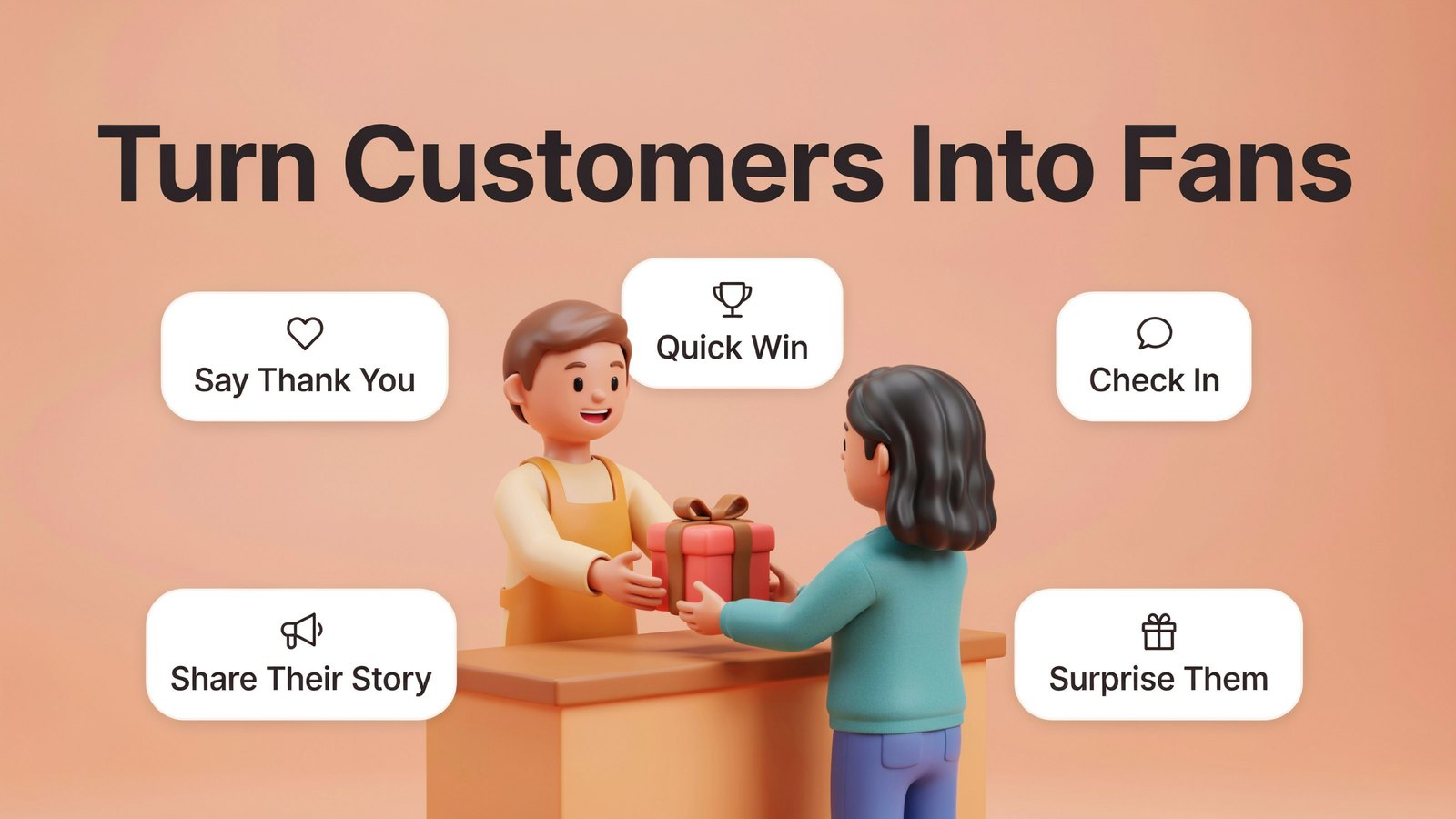
- Say thank you personally. A short note from the founder is rare and memorable.
- Help them get a quick win. A simple setup guide or a five minute call makes sure they actually use what they bought.
- Check in after a week. Ask what's working and what's confusing. Fix the confusing parts fast.
- Share their success. With permission, turn their results into a story on your site and in your emails.
- Surprise them. An unexpected bonus or upgrade turns a customer into someone who tells friends about you.
Early customers who feel looked after become your loudest supporters. They write the reviews, answer questions in your community and send you referrals without being asked.
Track It in a Simple Sheet
You don't need fancy software to track your first 100. A spreadsheet works.
| Column | What to Write |
|---|---|
| Customer | Name or business |
| Date | When they bought |
| Source | Network, community, outreach, content, review or ad |
| What they said | Their words about why they bought |
| Next step | Review, referral or upsell |
After 30 customers, look at the source column. Do more of what's working. Drop what isn't.
And save the "what they said" column. Those words are the best marketing copy you'll ever have.
A Simple 90 Day Plan
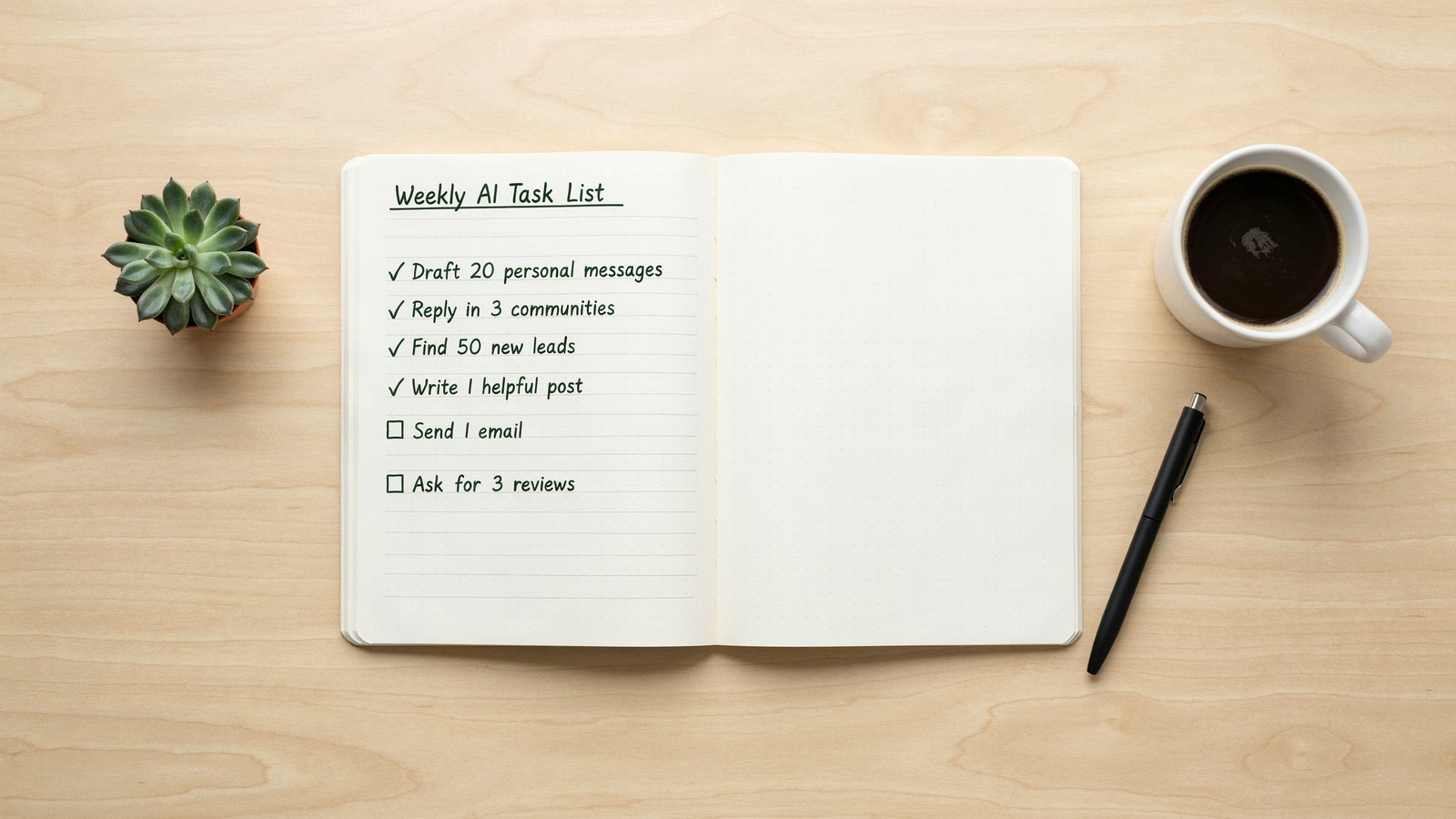
- Days 1 to 7. Fix your offer, website and payment. Make your list of people you know.
- Days 8 to 21. Message your network personally. Aim for your first ten customers.
- Days 22 to 45. Show up in two or three communities every day. Start your own small group.
- Days 46 to 70. Run personal outreach to a small, targeted list. Start a weekly email.
- Days 71 to 90. Publish content from real customer questions. Ask for reviews and referrals. Test a small ad.
Some businesses hit 100 in a month. Some take six. The speed matters less than keeping at it every single week.
A Quick Example
Let's say Maria starts a small bookkeeping service for local cafes and shops.
She messages 40 people she knows and wins her first 6 clients in two weeks. Then she joins three local business groups and answers money questions every day, which brings in 12 more. Next she builds a list of local cafes, sends short personal emails with a free cash-flow checklist, and signs 20 more.
Her weekly tips email keeps her name in front of everyone who said "not yet". Reviews and referrals from happy clients bring the rest. Around month four, she passes 100 clients and her calendar starts filling on its own.
Nothing fancy. Just the right stage at the right time, done every week.
Mistakes That Slow Down Your First 100
- Waiting for perfect. Launch, sell, then improve.
- Hiding behind building. More features won't sell a product nobody knows about.
- Letting AI speak for you. Use it to draft and speed up, never to replace your voice.
- Spamming. Mass messages burn your name. Personal ones build it.
- Starting with ads. Paid traffic on an untested offer burns money fast.
- Forgetting past customers. Your existing customers are your best source of new ones.
Frequently Asked Questions
How long does it take to get 100 customers?
It depends on your price and market. Low-priced products can get there in weeks. Higher-priced services may take a few months. Steady weekly effort matters more than any single tactic.
Can AI find customers for me?
AI can find leads, write drafts, personalize outreach and answer questions. But people still buy from people. Use AI to do more in less time, and keep the human part human.
Should I spend money on ads to get my first customers?
Usually not at first. Win your first customers through your network, communities and outreach. Once you know what converts, small ads can speed things up.
What if I don't have a network?
Start with Stage 2. Join communities where your customers spend time and be genuinely helpful. Your network grows quickly when you show up every day.
Do I need all these tools?
No. Start with the stage you're in and pick one tool that saves you the most time there. Add more only when you need them.
Final Thoughts
Your first 100 customers are the hardest you'll ever win. They're also the most valuable. They teach you what to sell, how to say it and where to find more people like them.
Work through the stages, use AI to move faster, and keep the human touch.
If you haven't started your business yet, begin with our step by step guide on starting an online business with AI. And when you're ready for the tools, explore everything we make at Teknikforce.